Ironically, the free time Americans once had that helped boost RadioShack\’s fortunes in the \’60s, \’70s and \’80s were eliminated, in part, by the very technologies it helped create. The article notes how Apple\’s Steve Wozniak relied on RadioShack for parts when he was developing what eventually became the first Apple computers, and how Microsoft\’s Bill Gates wrote the operating system for RadioShack\’s TRS-80 computer. So what does this have to do with industrial automation? I sense a shift happening in the automation space. That shift, though clearly not leading away from innovation, seems to represent something of a slowing in the near constant stream of new product introductions across the board. This slowing does not portend a slowdown of the automation industry, but rather a shift toward a greater focus on the application of technologies via Industry 4.0 and the Internet of Things (IoT). Having covered the industrial technology space for more than two decades now, I get the sense that these two initiatives – Industry 4.0 and IoT – are forcing the real-world application of technologies the automation industry has been promoting for years. In fact, one of the reasons I believe IoT has generated so much interest is that it\’s more about implementing sensor, communication/networking, safety and associated digital production systems in an interoperable fashion than it is about any entirely new technology. One of the knocks on the industrial technology sector has always been that, for all the wonderful talk about cutting-edge hardware and software automation technologies, many manufacturers still use in-house designed Excel worksheets and other simple tools to manage production as much, if not more, than they use advanced automation technologies. You can argue that this increased focus on application is ultimately being driven by government initiatives such as Industry 4.0 and the push toward IoT by the biggest technology players – and you\’d be right. But the result is, nonetheless, a greater focus on the application of technologies rather than the perpetual innovation of them as the principal focus of automation companies in general. Make no mistake, innovation in the industrial sector will not cease or be relegated to the backseat. However, I do believe it will begin to stand on a more equal footing with real-world implementations and results. Just last month, while attending the ARC Industry Forum in Orlando, I saw evidence of several innovative technologies, most notably the new automation products from Bedrock Automation (see \’Industrial Control Redesigned\‘, awgo.to that demonstrate innovation is alive and well in the automation sector. But as interesting as any new technology may be, the real test of its viability lies in its application – and not in a few instances, but widely. As for how this relates to The Wall Street Journal\’s RadioShack article, I think that, just as the tech industry developments fostered by RadioShack spelled its demise, the automation industry is wise to avoid any possibility of a potential downturn by focusing on application and, as a result, keeping in close contact with what matters most to its customers. As Peter Holicki, corporate vice president at Dow Chemical, stated in his keynote at the ARC Forum, the only technology applications he\’d ever seen succeed were those in which the technology was clearly aligned with the business strategy. Building off of Holicki\’s statement, the lesson from RadioShack could well be that the law of unintended consequences can create an outcome for your business that is likely to be quite different from anything you could possibly envision. Since no one has a crystal ball, all anyone can do is focus on what matters. And successful applications are what matters to the automation technology industry.
Application vs. Innovation
-
Hohe Reinheit auf langen Wegen
Reinraum-Energieführung
Ob in der Mikroelektronik, der Halbleiter- oder der Batteriefertigung, überall geht es um Partikelfreiheit und maximale Prozesssicherheit.
-
Mit integrierter Statusanzeige
Beleuchteter RFID-Kartenhalter
Für seine RFID-Systeme hat Georg Schlegel einen beleuchteten Kartenhalter entwickelt, der funktionale Anforderungen und Gestaltung miteinander verbindet.
-
Habia stellt Führung neu auf
Habia gibt zwei bedeutende Veränderungen in der Unternehmensführung bekannt: Zum 1. April übernimmt Axel Barnekow Widmark (l.) die Position des Chief Executive Officers.
-
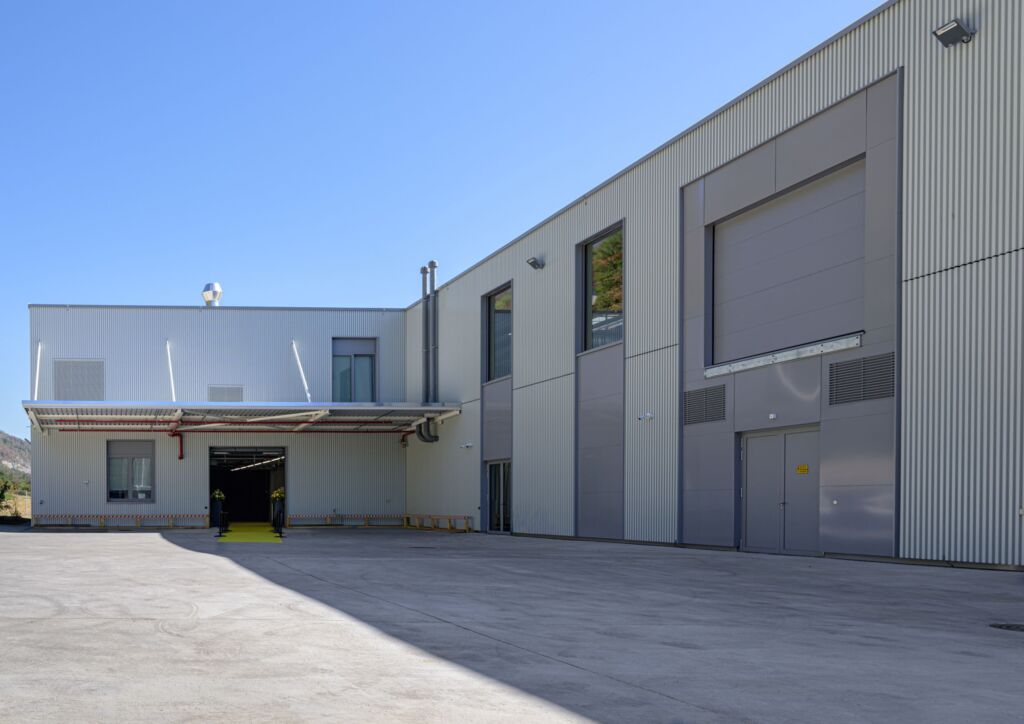
Sieb & Meyer erweitert Fertigungskapazitäten in Lüneburg
Im zweiten Quartal verlagert Sieb & Meyer Teile seiner mechanischen Fertigung in eine externe Produktionshalle.
-
All-in-Pakete ohne Zusatzkosten
Integrierte Engineering-Lösungen
Unternehmen im Schaltschrank-, Maschinen- oder Anlagenbau benötigen heute nicht einzelne Werkzeuge, sondern integrierte…
-
Für flexible Automatisierungsanwendungen
Robuste Leitungen
Die Ölflex Robot 909 ist als zentrales Serienprodukt der Performanceklasse Basic Line speziell…
-
Energie- und Auslastungsmonitoring
Strommesseinheit
Mit der neuen Strommesseinheit CMU DC bietet Phoenix Contact eine eindeutig verständliche und…
-
Für den Schaltschrankbau
Robuste Schaltnetzteile
Die Schaltnetzteil-Serie SNT94 von Feas ist für den Einsatz in industriellen Schaltschränken ausgelegt.
-
Phoenix Contact: Umsatzplus von 10% im ersten Quartal
Phoenix Contact ist mit einer starken Wachstumsdynamik in das Jahr 2026 gestartet.
-
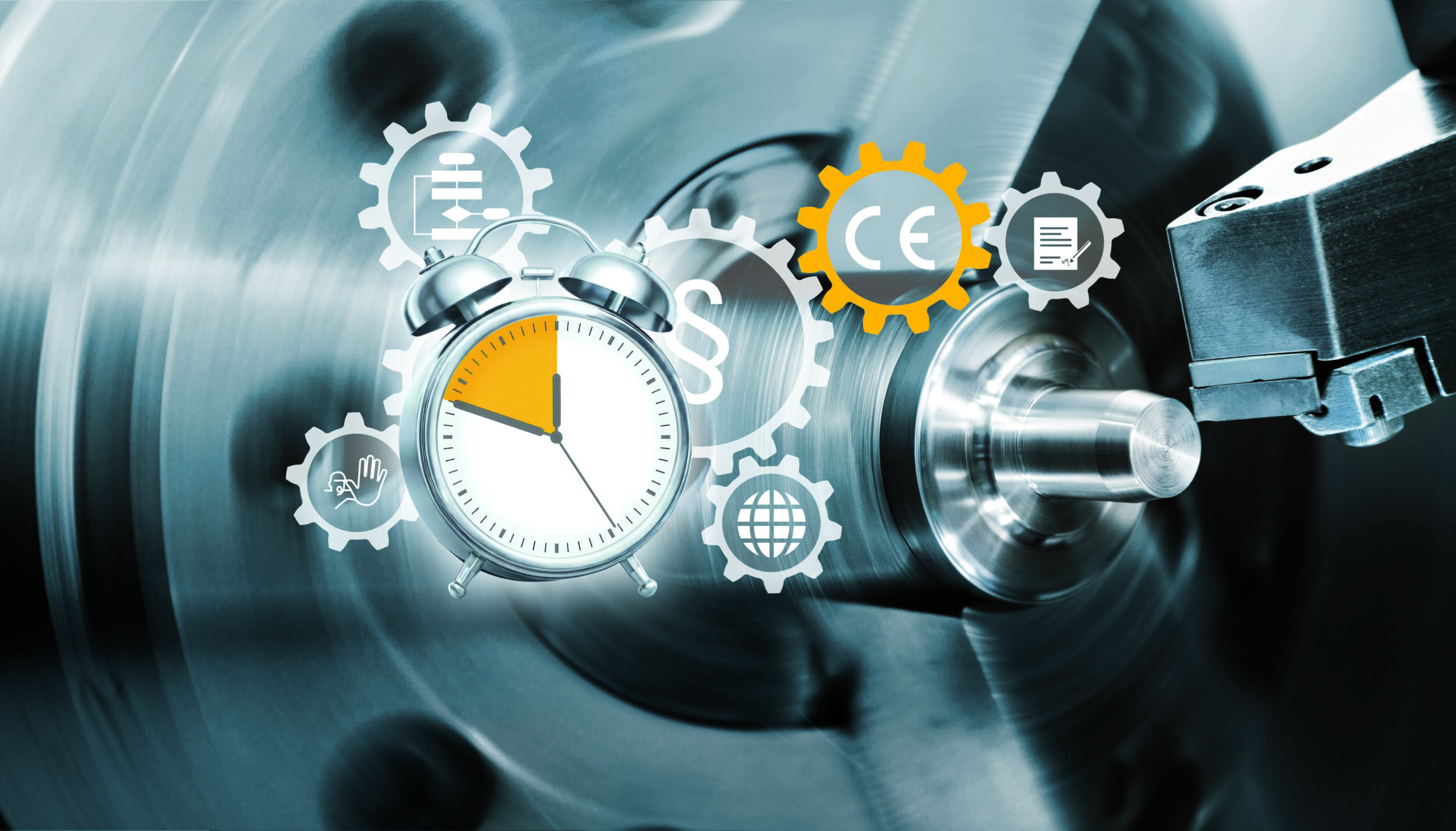
MVO und CRA: Was Maschinenbauer jetzt wissen und tun müssen
Zwei Fristen, eine Verantwortung
Ab Januar 2027 löst die neue EU-Maschinenverordnung (MVO) die bisherige Maschinenrichtlinie ab -…
-
Sensorlose Sicherheitsfunktionen für die Antriebstechnik
Werkzeugmaschinen & Co sicher betreiben – ohne Drehzahlgeber
Bei Bearbeitungszentren und Werkzeugmaschinen bestehen für den Bediener oder Servicetechniker Gefahren durch rotierende…
-
Für kleinere bis mittlere Anlagenbauer
Drahtkonfektionier-Vollautomat
Rittal den Wire Terminal WT L vor, der besonders die Anforderungen kleinerer und…
-
Kompakte und präzise Kit-Encoder
Megatron bietet die Drehgeber ETx25K und HTx25K in unterschiedlichen Ausführungen an – als…
-
Miniatur-Absolutdrucksensor mit Kühladapter
Kistler präsentiert einen neuen Adapter mit integrierter Wasserkühlung (Typ 7547A) für den Miniatur-Absolutdrucksensor…
-
Robuste Sensoren für maritime Anwendungen
Die Sensoren der Full-Inox-Maritime-Serie von Contrinex bieten hohe Schutzarten (IP68/69K), sind korrosions- sowie…
-
Multifunktionale Stromverteilung für Power-to-X-Pilotanlage
„Wir können jederzeit umbauen oder erweitern“
Das Startup Greenlyte Carbon Technologies treibt mit neuartigen Power-to-X-Pilotanlagen die Energiewende voran. Mittendrin…
-
Deutsche Elektroexporte ziehen im Februar kräftig an
Im Februar konnten die Exporte der deutschen Elektro- und Digitalindustrie kräftig zulegen: Sie…
-
SPS erschließt Automatisierungsmärkte in Asien und Amerika
Eine Marke, viele Märkte
Die SPS ist längst mehr als eine Messe in Nürnberg. Nach den Standorten…
-
Programmierbare Relais schließen die Lücke zwischen SPS und Steuergerät
Das richtige Maß für moderne Automation
Mit einer Serie einfach programmierbarer Relais schließt Akytec die Lücke zwischen komplexen SPSen…
-
Bereitstellung der Ethercat-Funktionalität über den PLCnext Store
Ethercat in PLCnext
Mehr Performance, mehr Offenheit, weniger Integrationsaufwand: Moderne Automatisierung verlangt nach durchgängigen, flexibel erweiterbaren…
-
Middleware-Plattform für die industrielle Datenintegration
IT/OT-Datenintegration in der Praxis: Deployment zwischen Windows, Containern und Edge
Heterogene IT/OT-Landschaften sind in der Industrie die Regel – und mit ihnen unterschiedliche…
-
Prozessüberwachung im Food-Bereich
Kreislaufwirtschaft statt Einwegverpackungen
Das von CM-Automation und Ifco Systems gemeinsam entwickelte SmartGuardian-System standardisiert und überwacht weltweit…
-
Induktiver Präzisionswegsensor
Der mechanisch induktive Präzisionswegsensor Typ 8742 von Burster ist in Messbereichen von 0-2…
-
Lagerlose Safety Kit Encoder
TWK ergänzt seine Reihe der lagerlosen Drehgeber um die nach Herstellerangaben weltweit ersten…